
Use SIKU to take photos and videos of your ice observations, warn community members of dangerous conditions and share sea ice terminology in your own Inuktut dialect.
How to Join

Step 1
Download the SIKU app. It’s free and made by and for Indigenous communities.


Step 2
Make an Ice Post. To qualify, it must:
Be made on the land †
Tag your Inuit community in Canada
Include a photo or video of the ice conditions
Tag ice in your Inuktut dialect or describe the ice conditions
Be created & uploaded between Oct. 1, 2025 and June 2, 2026
Make sure Ice Watch Stewardship is turned on in your post privacy settings!
† SIKU Ice posts containing video interviews with community ice experts talking about ice conditions and safety also qualify, even if they’re made in town.
Step 3
That’s it! We’ll notify you if you’re a winner.
Prizes
Weekly Prizes
Every week between during the challenge, one SIKU ice post creator will be awarded a $150 Northern Gift Card! The Weather Network will feature winning posts!



Grand Prizes
At the end of the challenge, winners will be selected based on their excellent contributions to ice safety and Inuit Qaujimajatuqangit.
🥇
Grand Prize – NEW SNOWMOBILE!
🥈
Second Place – $500 Gift Card
🥉
Third Place – Custom-made unaaq (harpoon)
Weekly Winner Gift Cards – $150


Ice Safety
Stay Safe
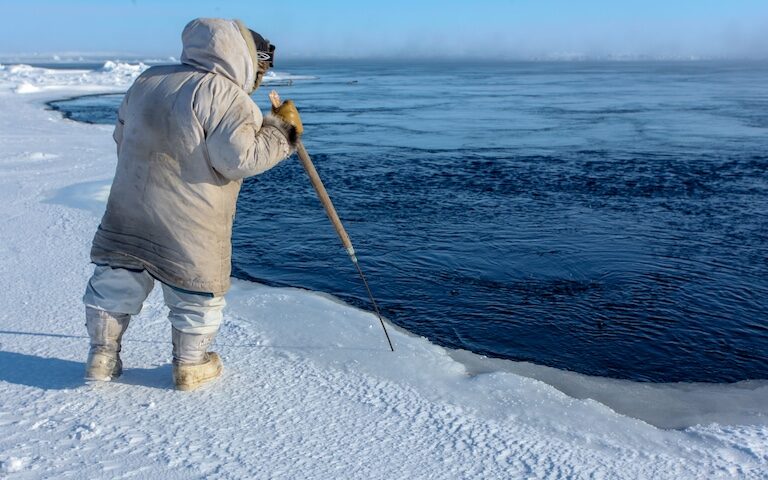
Never put yourself in danger to make a post for the Ice Watch Challenge.
If ice conditions are dangerous, stay away and select the Dangerous Ice checkbox in your SIKU Ice & Snow Post to let others know it is not safe.
Full Terms & Conditions
Ice Conditions
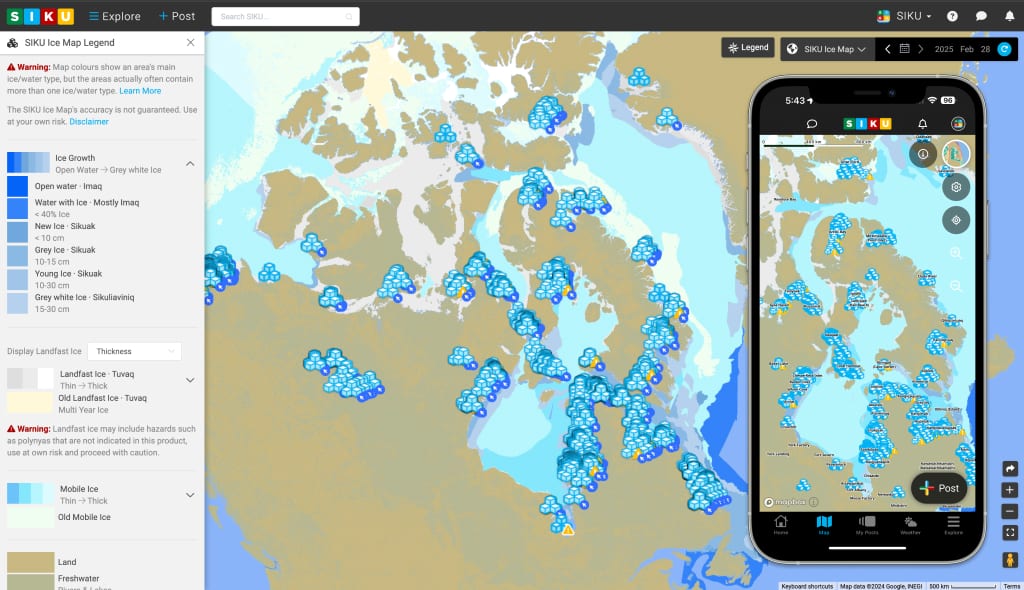
The SIKU Ice Map displays Ice Posts showcasing Inuit Knowledge alongside ice charts showing the floe edge, ice roughness, SmartICE data, and satellite imagery. Ice Posts collected as part of the Ice Watch may be used to train machine-learning algorithms to classify sea ice using Inuktut terminology. Learn More

Safety Services
Used alongside a harpoon and other forms of Inuit Knowledge, SIKU’s services can support trip planning and improve ice safety.
Share Knowledge
Making an Impact
Share knowledge with your community and across the North.
Between 2021 – 2025, SIKU users supported ice safety and climate change action across 88 communities, sharing more than 7,000 ice posts.

Make Great Posts!
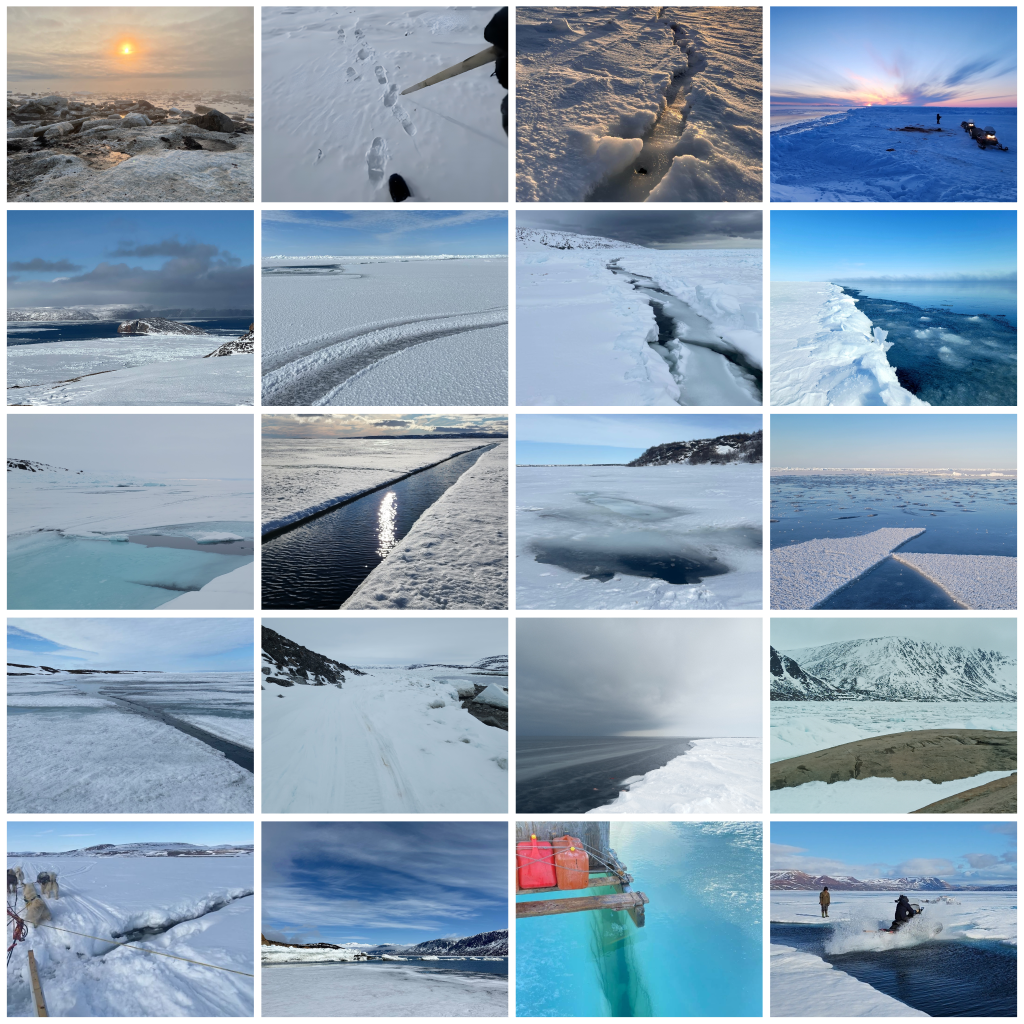
Learn about what makes a great ice post by viewing posts from previous winners.
Tag Ice in Your Dialect
Photos, videos and comments made during the Ice Watch contribute to SIKU Ice & Snow Profiles containing local Inuktut dialects.

Frequently Asked Questions
Still have Questions?
Partners & Sponsors

Ice Watch is brought to you by the Arctic Eider Society, an Inuit-led charity established in 2011, and developer of SIKU: The Indigenous Knowledge App. SIKU is a web and mobile platform that provides tools and services for Indigenous communities to lead their own research and monitoring programs.

The North West Company is a leading retailer to underserved rural communities and urban neighbourhood markets. Their stores, including Northern stores, offer a broad range of products and services with an emphasis on food. The North West Company has been a major supporter of the Ice Watch Challenge since 2021.

The Weather Network is committed to delivering weather information 24 hours a day, 365 days a year, across all platforms. The Weather Network is supporting the Ice Watch Challenge by including the SIKU Ice Map in their weather broadcasts, and sharing Ice Watch videos on television. The Weather Network supports Ice Watch by broadcasting content that reaches more than 179,000 households.
Legal
Qualifying Requirements
- Ice Posts must be made between October 1, 2025 and June 2, 2026
- All posts must be unique observations – no duplicates
- All posts must be real, relevant, and reliable – no fake posts or old photos
- You must be 19 or older to win

Terms and Conditions
- Never put yourself in danger in order to create a post for the Ice Watch. Do not approach dangerous areas.
- Winners from communities without Northern stores will receive an alternate equivalent prize.
- Use SIKU ice services at your own risk. The Arctic Eider Society cannot guarantee the accuracy of information shared by other users or 3rd party services. SIKU ice services should not be used as a primary way to assess ice safety; they work best when combined with your own experience and knowledge of the ice, and that of experts in your community.
- By entering the Ice Watch, you agree to make your SIKU Ice & Snow Posts publicly visible and to contribute ice data to products and services which support knowledge transfer and ice safety, such as the SIKU Ice Map, for the benefit of Indigenous communities.
- Ice Watch posts may be used by SIKU and partners, such as SmartICE, The Weather Network and Ugavut TV, for the purposes of sharing knowledge and ice safety as well as to promote the Ice Watch on social media, television and other channels. Winning posts may be shared widely in the press and on social media.
- Participants may be subject to additional terms and conditions and winners will be determined at the sole discretion of the Arctic Eider Society.
- The Arctic Eider Society reserves the right to disqualify any posts or contestants at their sole discretion and without providing a reason or notice. Users agree to the Terms of Use and Privacy Policy of the SIKU platform, including respect for Indigenous knowledge, rights and integrity.
Waiver
By participating in the Ice Watch Challenge and/or using SIKU and SmartICE products, you acknowledge that you are doing so at your own risk on a volunteer basis, and agree to waive all rights to claims, litigation or other actions related to these platforms, tools and services.